School premises
The entrance, tree-lined paths and classroom verandas.
Silent video · 23 secondsOur living history
The story of L.S. High School is written not only in registers and examination results, but in the journeys of families, teachers and students across generations.
Official school profile: UDISE+ code 10071201202
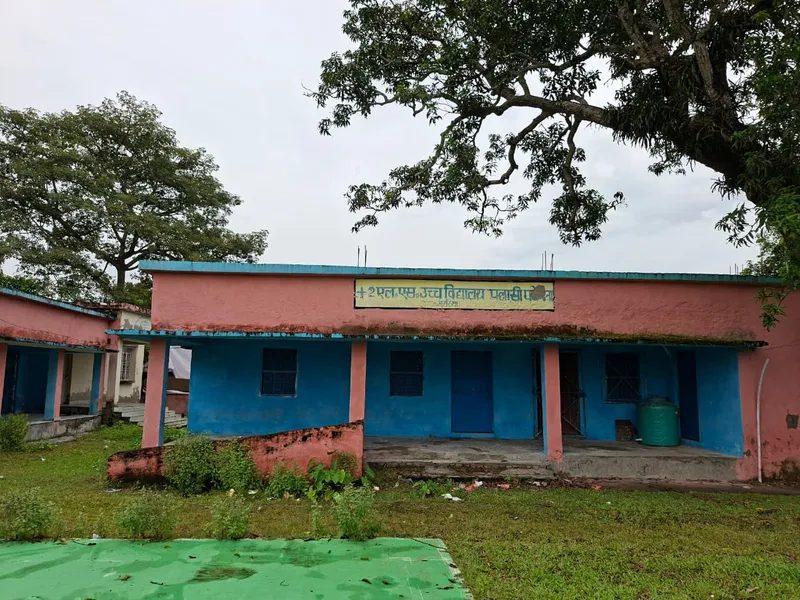
Places we remember
Short, silent videos of the school and its surroundings. Choose a scene and press Play.
The entrance, tree-lined paths and classroom verandas.
Silent video · 23 secondsThe basketball court and open grounds, surrounded by trees and classrooms.
Silent video · 13 secondsThe courtyard and shrine buildings of the temple near the school.
Silent video · 21 secondsThe place
In the low, river-shaped plains of northeastern Bihar, L.S. High School became an educational centre for a constellation of villages—not only Pategna and Palasi, but Tegachhia, Jamua, Khawaspur, Tarabari, Belbari, Rahatmina, Puraini and others remembered in the alumni register.
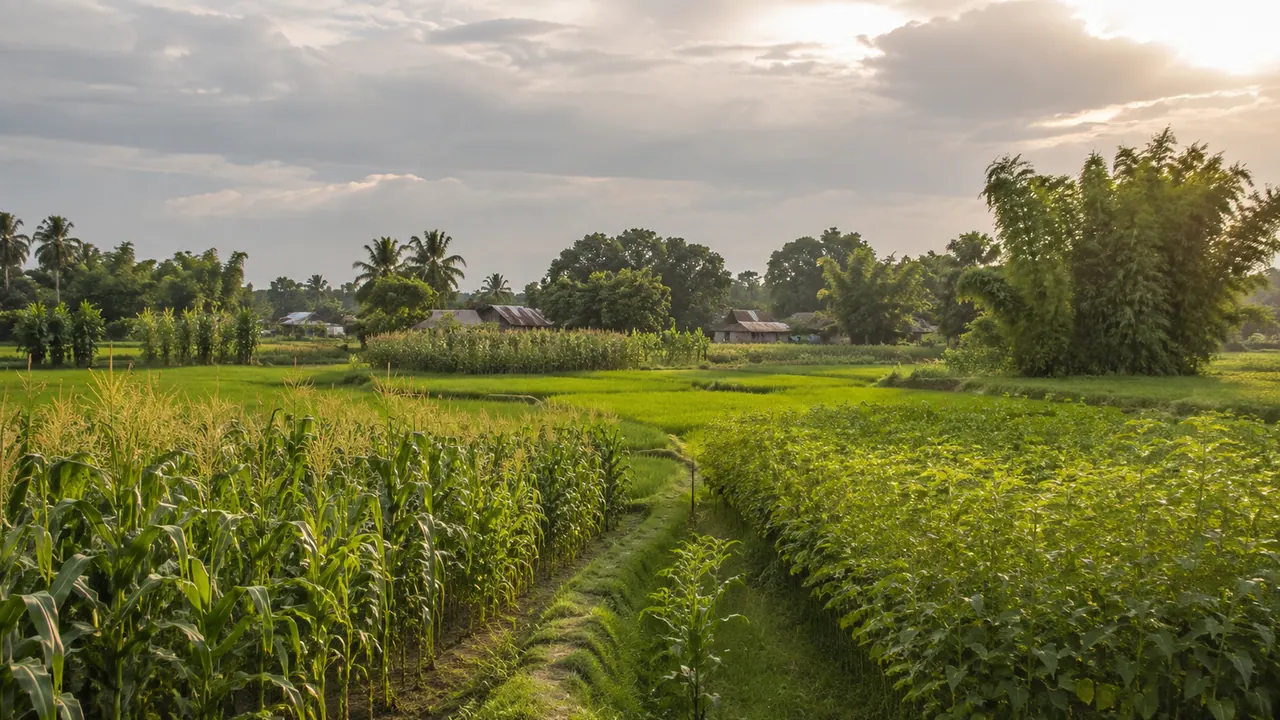
Pategna is in Araria Block, near the adjoining Palasi locality and roughly fifteen kilometres north of Araria town. The wider district is an alluvial agricultural landscape where rivers, monsoon seasons, paddy, maize and jute shape both livelihood and movement. In such a setting, a high school was never merely a building: it shortened the distance between village life and higher education.
Araria geography and economy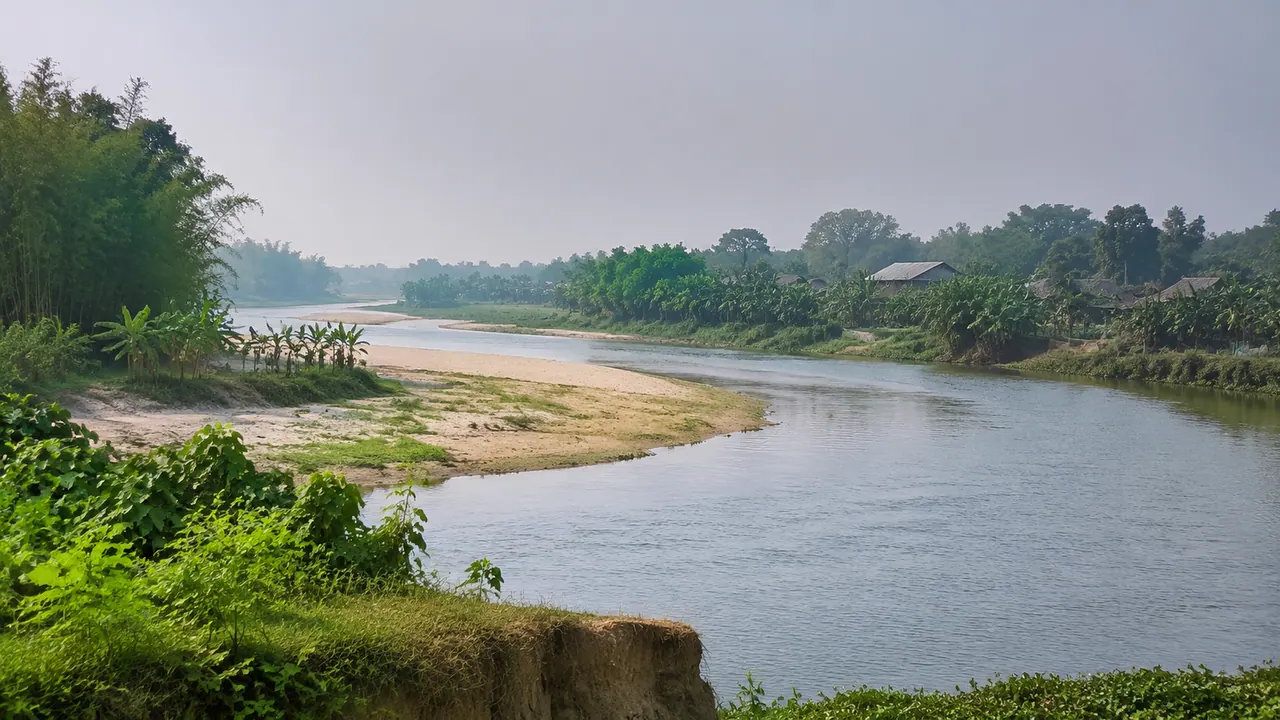
The beginning
Established in 1955, L.S. High School began within the first decade of India’s independence. It received secondary recognition in 1963 and entered the higher-secondary era in 2015.
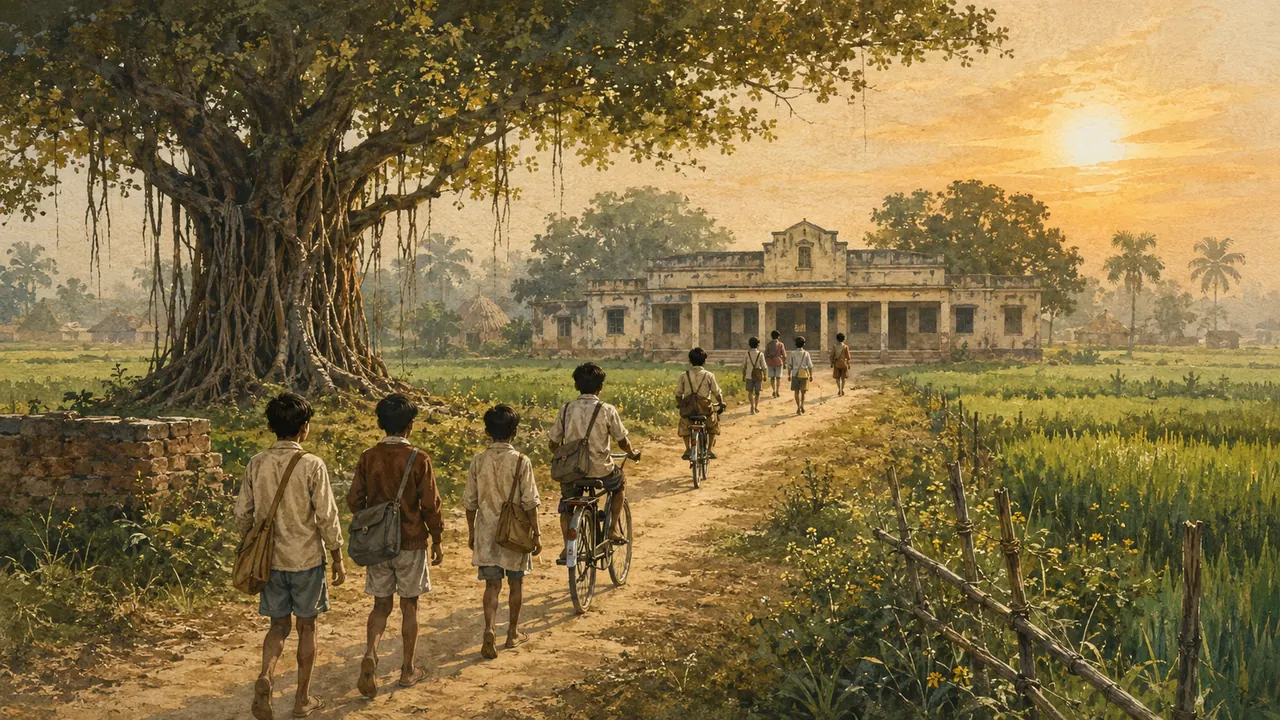
Headmaster Damodar Kunwar served at the school from 1965 into the 1980s. The directory brings together teachers and staff from across generations, and its first dated alumni entries are from 1969.
A rural educational institution takes root.
Official recognition for secondary education.
Higher-secondary recognition extends the academic path.
On the OFSS page, select the academic year, choose ARARIA under District, enter 92042 under Intermediate Code, and run the search. Look for “+2 L.S. UCHH VIDYALAYA, PALASI PATEGNA, ARARIA.”
Many voices, one classroom
Araria cannot be described in a single language. Hindi and Urdu share public life with Maithili, Thethi, Kulhaiya, Shekhra, Bhojpuri, Bengali and Surjapuri.
The remembered faculty taught Maithili, Hindi, Urdu, Sanskrit and English alongside mathematics, science, biology, history, geography and social studies. Languages of the home and village stood beside the languages of literature, administration and higher education; inherited knowledge met modern science.
This is the wider Purnea cultural landscape whose dialects, songs and village voices Phanishwar Nath “Renu” carried into modern Hindi literature. That is a regional connection—not a claim that Renu was directly associated with the school.
The widening circle
The alumni directory includes 73 entries. Graduation years are recorded for 68 alumni, ranging from 1969 to 2015.
Teachers, headmasters, doctors, bank and postal officers, lawyers, journalists, business owners and civic leaders.
Work in education, medicine, courts, government, banking and the professions across Araria, Purnea, Kishanganj, Darbhanga and Patna.
Alumni service connected with the Indian Air Force, DRDO, HEC, BVFCL, India Post, Indian Railways, banks, universities and hospitals.
The present register names no verified overseas posting. Country-by-country impact should be added only as alumni supply evidence.
School memories
During September–October 1966, an unexpected four-day strike took place at the school because there were no provisions for physics and chemistry laboratory facilities or for sports. The story of the strike is a long one, and this is not the place to recount it. I did, however, have to step forward and face the heat.
The Subdivisional Education Officer visited the school. Following that visit, the laboratory was renovated, and chemicals, equipment and other supplies were provided for experiments.
For the first time, a new football arrived at the school. Some students went to Pategna Chowk to have it inflated. After inflation, tying the valve tube and tucking it beneath the lacing was a distinctive procedure. A special hook was used for this. The students bringing the inflated ball back looked immensely proud. For the first time, we saw students playing football on the school field.
A few weeks later, for the first time, students were shown the methods and results of prescribed chemistry and physics experiments in the laboratory, instead of simply hearing them explained at the blackboard. The very first experiment was Satish Babu’s demonstration of how to prepare oxygen gas. We were in Class 9 when we saw a gas jar for the first time. Our sense of wonder was at its height.
Our roots · Our memories · Our school
Its roots remain in the soil of Palasi–Pategna. Its branches reach across India and beyond her borders. Its story continues wherever an alumnus uses knowledge in the service of others.